By Miles Layton
As winter storms and cold snaps grip communities across the nation, water systems often face an invisible but costly challenge: broken water lines caused by extreme temperature changes. Local officials say fluctuating weather, frozen ground, and expanding water inside pipes combine to create what some describe as a “perfect storm” for leaks.
The Albemarle Observer reached out to folks across the country to see how they are coping — Edenton, NC; Athens, Ohio; Tangier, Va.; McDowell County, WVa.; and Columbia, NC.
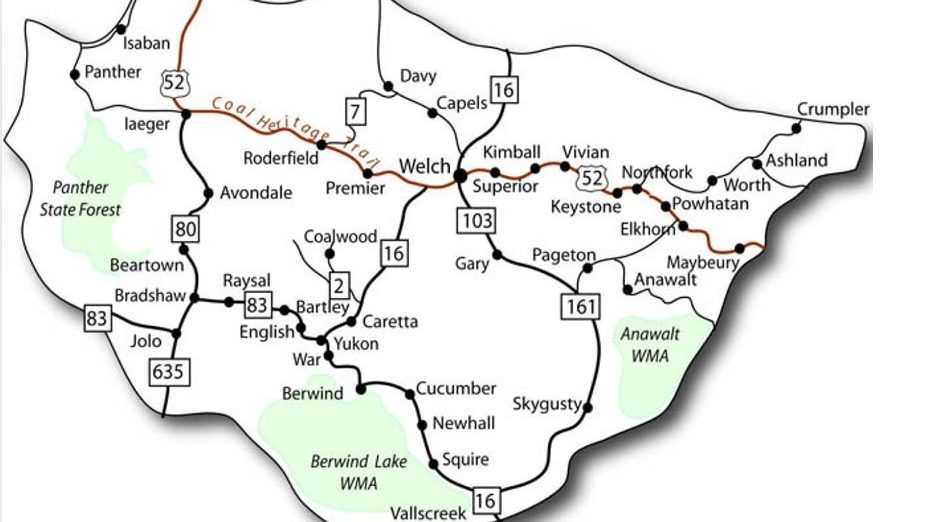
Located in southern West Virginia, McDowell County has many villages, with the county seat being Welch — a great place to visit.
Kimball has a population of around 145 people – a coal mining town with friendly people.
Mayor J. Adam Gianato of Kimball said crews recently worked extended hours to resolve a major leak.
“Earlier this week, crews from the PSD were hunting leaks in the area and working to identify the cause,” Gianato said. “They isolated it to an area and worked to locate it. I know the leak has been fixed and all residents are back in water.”
At one point, about six residents were without service. Gianato praised workers for their dedication.
“The PSD had workers and supervisors out until after 11 p.m. and working all day,” he said. “Their commitment in the cold is unwavering.”
Officials across communities say winter water line breaks are difficult to prevent entirely, but quick response and routine maintenance help minimize disruptions. As temperatures continue to fluctuate, utility crews remain on alert, working behind the scenes to keep water flowing even in the harshest conditions.
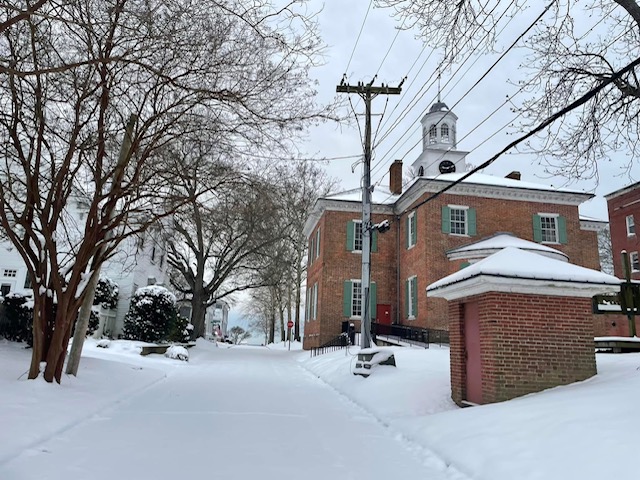
Located by the Albemarle Sound in coastal North Carolina, Edenton is a small town with a population of around 4,400 people – and we’ve had “real” winter weather in recent days that included several inches of snow and frigid temperatures. Then, as temperatures creep back up, water line breaks become an issue.
Edenton Town Manager Corey Gooden explained that winter weather places stress on water infrastructure both inside and outside the pipes.
“Water leaks during winter storms are commonly due to the contraction of the piping material, the soil, and the extra external weight of snow and ice,” he said. “While all that is going on around the pipe, the inside liquid is expanding. Water is one of very few compounds that expand when it becomes colder — the perfect storm.”
Gooden noted that sudden temperature changes, not just extreme cold, often trigger problems.
“A really good general rule of thumb for water systems is that you can expect water leaks when there are large changes in temperature — up or down,” he said.
During a recent winter storm, Edenton experienced three to four water line leaks. Gooden praised Public Works employees for their quick response despite harsh conditions.
“The Public Works staff did an amazing job making the necessary repairs,” he said. “These crews responded immediately and fought the cold to get the job done. We have the best staff in every department. I could not be more proud of the team we built. World-class.”
Similar challenges have been reported in Athens, Ohio, where a water line break recently affected Columbus Road. Nestled in the hills of Southeast Ohio, Athens is a scenic, close-knit city of about 24,000 residents and home to Ohio University.
Subscribe — it’s free!
Athens Service-Safety Director Andrew Stone said freezing and thawing cycles are a major factor in winter damage.
“Water lines break in cold weather primarily because freeze/thaw action in the ground causes soil to shift and put stresses on pipes,” said Stone, a civil engineer, who also happens to be Brigadier General serving in the Ohio National Guard.
He explained that most water mains are buried below the frost line to prevent freezing, but geological conditions can sometimes limit how deep lines can be placed.
“Generally, the standard depth for a water main is 4.5 feet in Ohio,” Stone said. “But there are occasions where the line is shallower due to underlying rock or other reasons. Even if it is deep enough, expanding soil in an upper layer may impact what is beneath.”
Stone added that southern regions are also experiencing colder-than-normal weather.
“With this cold snap in the south, there is definitely an impact,” he said.
Repairing broken lines in winter is often difficult and dangerous work. Stone described the conditions crews face when responding to emergencies.
“The crews that do these repairs often do so in the middle of the night in sub-zero temperatures, with water spraying and soaking them as they attempt to clamp a break,” he said. “It can be both exciting and miserable all at the same time.”
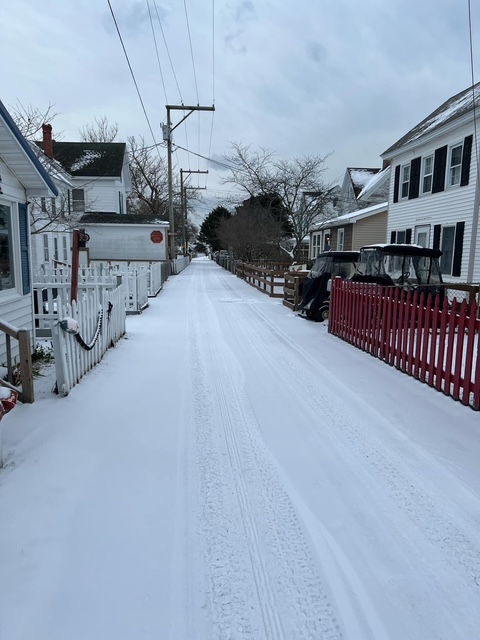
Nestled in the heart of the Chesapeake Bay, Tangier is a small island with about 400 residents in Virginia waters — a beautiful place to live. The island’s infrastructure is old, of course; the island is old too, named by Captain John Smith —yeah, that one from the 1600s—Google Pocahontas.
“The plumbing infrastructure on the island, the main pipes, not the individual houses, is well beyond its useful lifespan. It’s patched everywhere, and not skillfully patched at that. To say it’s precarious would be generous, but we cross our fingers and toes in the winter,” said Barb Baechtel, who owns and manages the Brigadune Inn with her husband, Rob.
Worth noting, what Baechtel is sharing is not uncommon in rural towns using old, very old, water systems in places between Alligator, NC and Zaleski, Ohio. No matter where you live, infrastructure repairs are expensive, but without investment, rural communities suffer.
And it gets cold in Tangier — so cold this year that the Chesapeake froze over, leaving the island stranded in recent days. Pipes aren’t too happy either, so the island’s residents have to be strategic about showering and such.
“Years ago, our first house here — we had 20 breaks that winter,” Barb Baechtel said. “We had to move out of our house for four months while the pipes were replaced. The pipes were corroded and galvanized — they just shattered.”
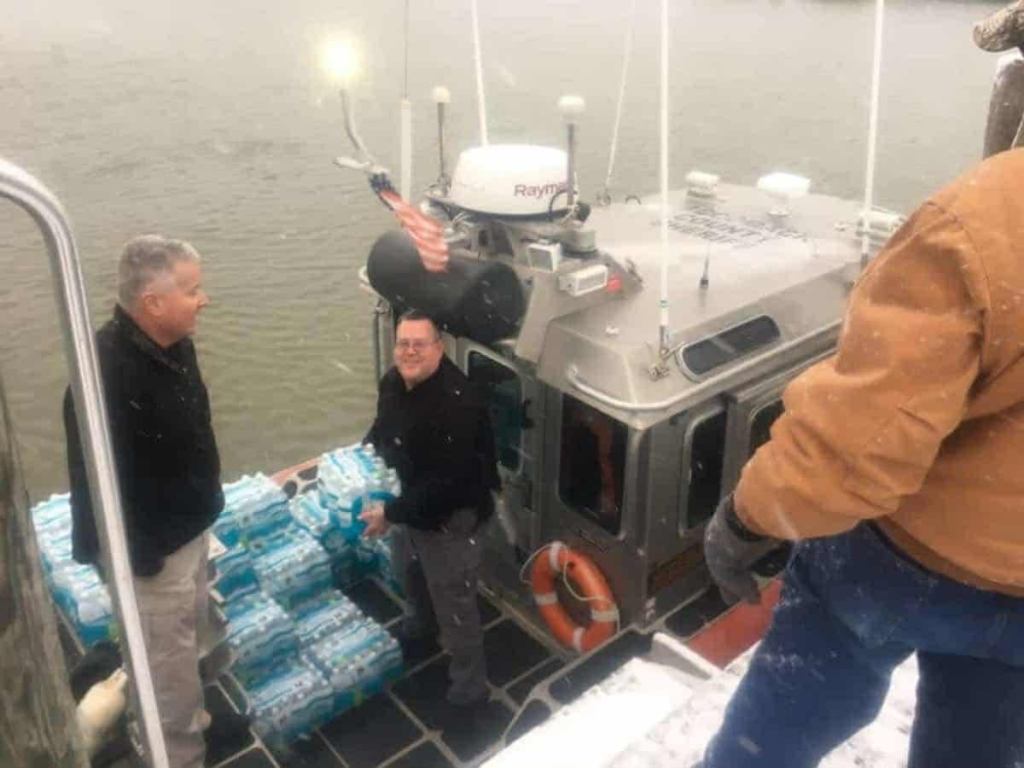
Flashback to 2019 — Tangier’s main water line broke, so the residents had to collect drinking water from the Eastern Shore.
“The Town received donations from all over the region of bottled drinking water,” Baechtel said. “It was delivered to each house and we got so much that we had to store in the rec center. It was far more than we could actually use. The whole region really came together for us.”
Meanwhile, in Tyrrell County, a small coastal NC county with about 3,200 people, Utilities Director Jeremy Haislip said his department is taking a proactive approach by monitoring customer usage.
“Our crews are checking water meters at each home for about 1,600 customers,” Haislip said. “If there is sudden high water usage, they inform residents to check for leaks.”
Haislip reported that several water leaks were identified and addressed during the past week through this monitoring process.
Anyone with news tips, please reach out to mileslayton1969@gmail.com
 McDowell Free Press
Leave a comment